


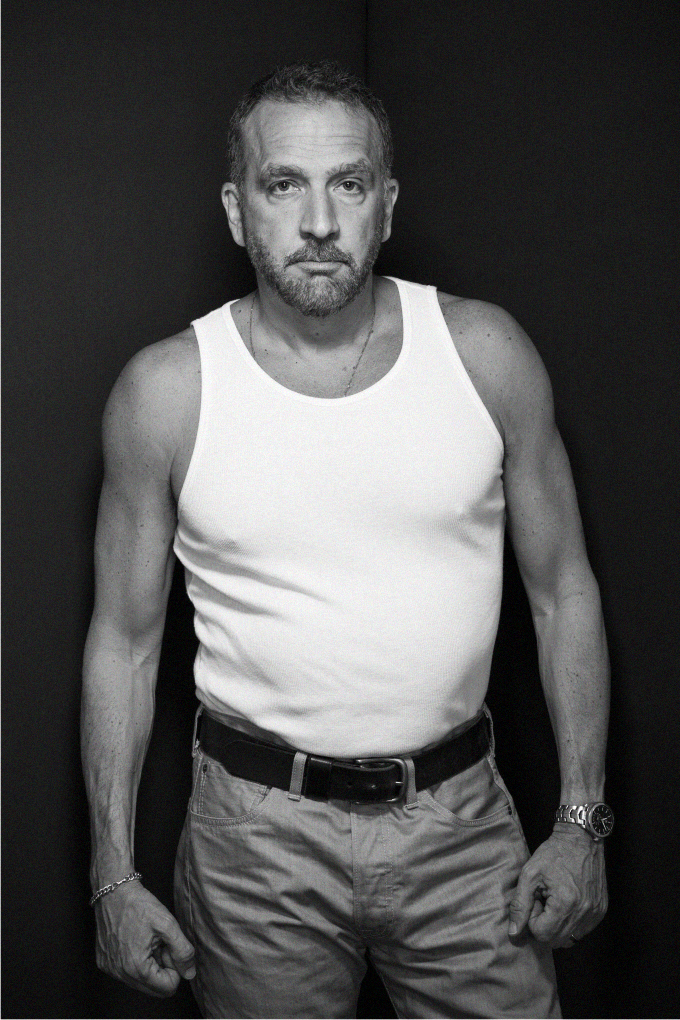
George Pelecanos is a Greek American author born in 1957. He has written dozens of detective novels, all of them full of redemption, masculinity in the best sense of the term, and codes of honor. They also include basketball and funk, cool cars and lots of morality. Pelecanos is, as almost everybody knows, a TV and cinema writer and producer. His most famous works are the HBO shows The Wire and Treme. George Pelecanos still lives in the same neighborhood where he was born, in Washington DC, with his wife and three kids. When we talk with him we confirm that when an artist becomes famous in the whole world doesn’t have to lose his enthusiasm and cordiality. Pelecanos is constantly laughing, and every time he looks back he seems to be living again those moments of bliss, flair and big expectations which shaped his spirit and work.
I’d like to start talking about your background: your teenage years, your jobs, working at the diner…
Well, it’s a lot… My dad was born in Greece and my mum is also Greek, but born in America, so I’m 100% Greek. My father had a diner in Washington DC, and I started working there when I was 11 years old.
And later your father got sick.
When I was 19 my father had a heart attack and cancer in the same year and I dropped out of college to run the business because otherwise my parents would have lost it. And the reason I could do that is because I’d worked there from the time I was eleven, so I knew what to do. The thing that was so influential for me on many levels was, first of all, seeing my father work so hard and figuring out as a kid that that’s what a man does. He gave me my work ethic. Also, the social milieu of Washington at the time. When I started going down there on the bus was right after the ’68 riots. It was just so much being thrown at me in terms of looking at the people on the bus and watch the city being burn… And then go on to the diner, where it was my dad and me, Greek-Americans, and then all black employees behind the counter, about five of them, and on the other side of the counter it was all white people wearing ties. And in the background was the music playing out of a soul station because my dad let the employees to play whatever music they wanted during the day on the radio. We had two station on AM that played soul music and because it was south of the Mason-Dixon line, because DC is the beginning of the South, the soul music that was being played was generally not Motown or northern soul, it was southern soul. It was Otis Redding…
Este artículo de nuestro archivo está completo para lectores registrados. Registrarse es gratis y solo lleva un minuto.



Pingback: George Pelecanos: «A veces la violencia es necesaria, es catártica»