


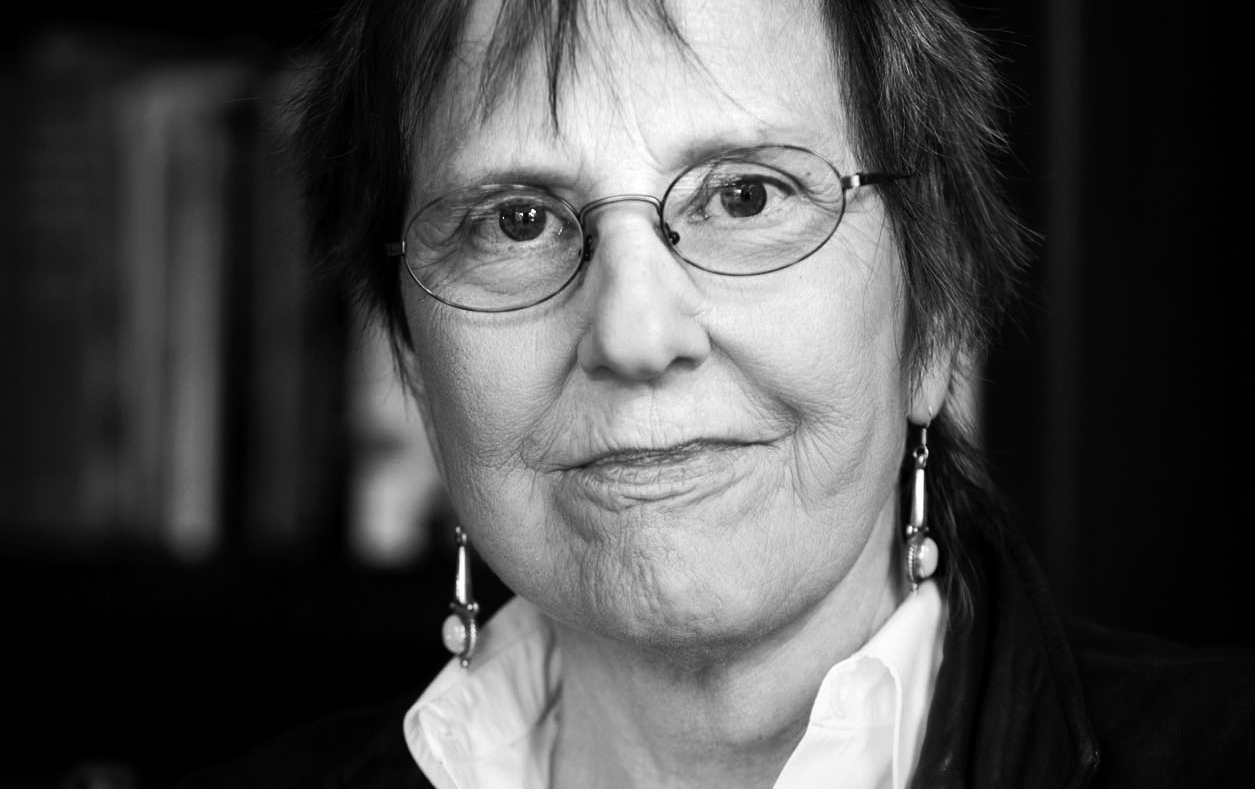
Rae Armantrout is one of the most relevant poetic voices in the U.S. nowadays. Born in Vallejo, California, in 1947 in a working-class environment, she graduated in creative writing at the University of Berkeley in 1978. There she became involved in the “Language Poets” movement, under whose influence she started her career as a poet. She has published more than a dozen poetry books, starting in 1978 with Extremities until her latest book, Money Shot, published in 2011. In 2010 she was awarded the prestigious Pulitzer Prize for her work Versed, praised for its way of “holding meaning (and identification) in uneasy suspension”. She has also won the National Book Critics Circle Award in 2009, and was finalist for the National Book Award in the same year. At present she lives in San Diego and teaches Poetry at the University of California. So far she has only been translated to German, although we expect to see a selection of her poems translated into Spanish soon.
Rae, you have very often shown yourself suspicious of labels and generalizations, but I would like you to comment briefly on your involvement with the “Language Poets”: what you did or pursued, who were your poet-fellows at that time, if you still keep contact or affinities with them…
San Francisco and New York were the birthplaces of Language Writing (or Language Poetry). I lived in San Francisco from 1972-1978 as the movement was taking shape. While I was there I developed friendships with Ron Silliman, Lyn Hejinian, Bob Perelman, Kit Robinson, Steve Benson, Barrett Watten, Carla Harryman, Tom Mandel, and Ted Pearson – the people who became the west coast Language poets. Ron was already there when I arrived and Barry came soon after. They were both influenced by the minimalist poetics of the slightly older Robert Grenier. In fact, Barry and Bob Grenier began This magazine, which was (along with Ron Silliman’s Tottel’s) one of the first magazine to publish Language Poetry. I was something of a minimalist in those early days too. Some might say I still am. But my influence wasn’t Bob Grenier so much as the early William Carlos Williams and even Basho. As the group coalesced, it began to articulate a resistance to the speech based, presence based poetics of predecessors such as Charles Olson, Robert Creeley, Allen Ginsberg, etc. and to emphasize a focus on textuality. This was several years before we were aware of Derrida and post-structualism, but when post-structuralist ideas did become widely available in the U.S., they reinforced Language Writing’s move toward textuality.
Este artículo de nuestro archivo está completo para lectores registrados. Registrarse es gratis y solo lleva un minuto.


Pingback: Jot Down Cultural Magazine | Rae Armantrout: “Me inquieta tener una experiencia que no se puede articular.”